What is the Pour Point?
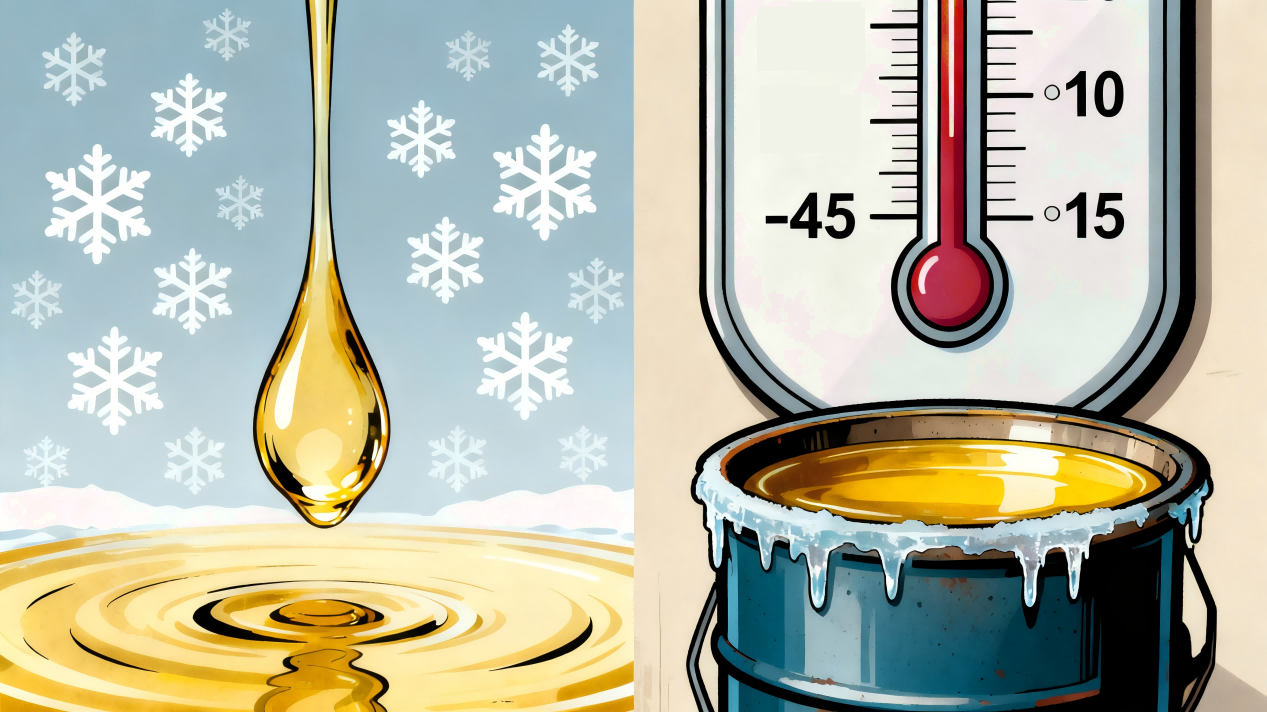
The pour point is the lowest temperature at which an oil sample can still flow under standard test conditions. Generally, the lower the pour point, the better the oil's fluidity at low temperatures.
Why Does It Matter?
A high pour point can lead to serious operational issues. If the oil is too thick to flow, it cannot transfer heat effectively. This leads to poor system efficiency, higher energy consumption, and risks like pipe blockages, filter clogging, and difficult equipment startup, which can cause costly downtime and damage.
How to Choose the Right Oil?
It is recommended to select an oil whose pour point is at least 5-15°C lower than the minimum expected operating temperature of the system or the ambient temperature.
However, the pour point is not necessarily the lower the better. The excessive pursuit of a low pour point will increase production costs, and the selection should be based on actual operating conditions.
Examples:
If your equipment operates at -15°C, please select an oil with a pour point of -20°C or lower, such as Armcoltherm 680 or Armcoltherm 690.
In extremely cold regions like Northeast China, where temperatures can drop to -45°C, oils like Armcoltherm 650 (pour point: -79°C) are essential.
Armcoltherm LD, with a pour point below -100°C, is more suitable for pharmaceutical production and processing equipment.

Solution for Oils with a High Pour Point
If your current oil has a high pour point, you can apply heat tracing or thermal insulation to the pipelines and equipment. This helps maintain the oil temperature above its pour point, preventing solidification and blockage.